Bondi's Refusal to Testify Raises Concerns About Accountability in Epstein Case
The former Florida Attorney General's decision not to appear before the House Oversight Committee shields a key figure from scrutiny in the ongoing Epstein investigation.
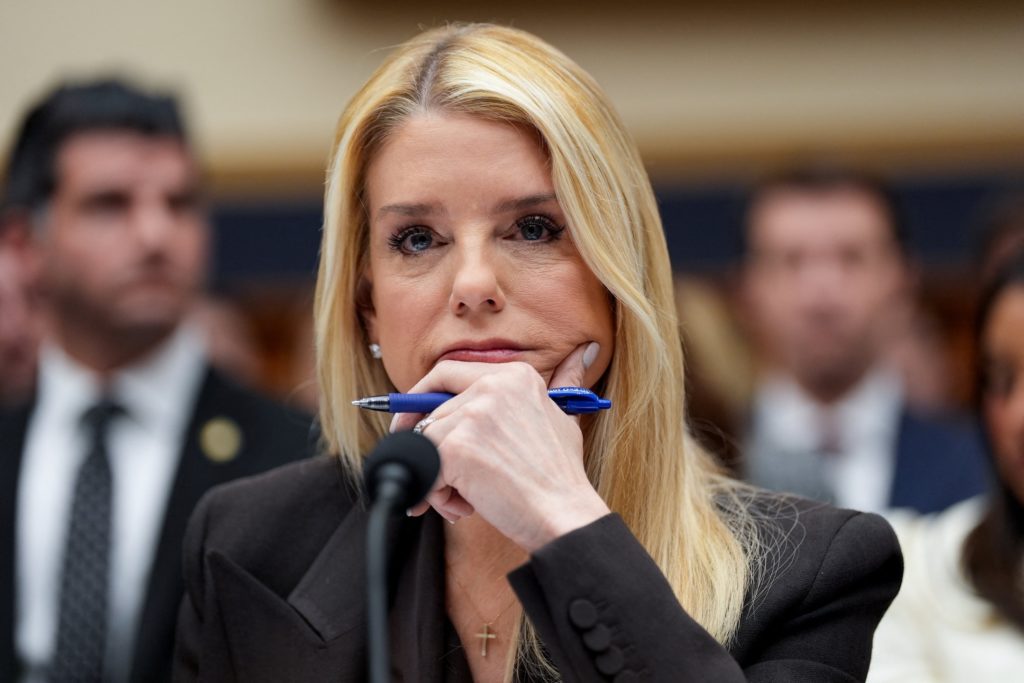
WASHINGTON – Pam Bondi's decision to decline a deposition before the House Oversight Committee regarding the Jeffrey Epstein case raises serious questions about accountability and transparency in cases of alleged sexual abuse and exploitation. The committee's investigation is meant to uncover potential government failures and oversight lapses related to Epstein's crimes. Bondi, as Florida's Attorney General during a significant period of Epstein's alleged criminal activity, held a position of public trust, and her refusal to cooperate hinders the pursuit of justice for victims.
The justification provided – that the subpoena was issued to her in her capacity as Attorney General, a position she no longer holds – rings hollow. It appears to be a convenient legal technicality used to avoid answering potentially uncomfortable questions. This raises concerns that powerful individuals are using their past positions to shield themselves from scrutiny and accountability.
The Epstein case has already exposed a network of wealthy and influential individuals who allegedly facilitated and enabled his horrific crimes. The House Oversight Committee's investigation is critical to uncovering the full extent of this network and to preventing similar abuses from occurring in the future. Bondi's refusal to testify undermines this effort.
This situation also highlights the power imbalances inherent in the legal system. While ordinary citizens are often compelled to testify in investigations, those with wealth and political connections seem to be able to evade accountability through legal loopholes and strategic maneuvering. This disparity erodes public trust in the justice system and reinforces the perception that there are different rules for the powerful and the powerless.
From a progressive perspective, this situation underscores the need for stronger laws and regulations to ensure that public officials are held accountable for their actions, even after they leave office. It also highlights the importance of independent investigations and oversight bodies to scrutinize the actions of government officials and to prevent abuses of power.
Furthermore, Bondi's refusal to testify raises ethical questions about her responsibility to the public. As a former Attorney General, she had a duty to uphold the law and to protect the interests of the people of Florida. By refusing to cooperate with the House Oversight Committee, she is arguably shirking that responsibility and potentially obstructing the pursuit of justice for Epstein's victims.
The long shadow of the Epstein case continues to loom large, revealing systemic failures and inequalities within the justice system. The legal justifications for avoiding testimony may technically hold, but they fail to address the moral imperative of accountability. The victims of Epstein's alleged crimes deserve to know the full extent of the complicity and enabling that allowed his abuse to continue for so long.
Bondi's non-compliance demands further investigation into the possibility of obstruction or concealment. The House Oversight Committee must explore all available legal and political avenues to compel her cooperation and ensure that those responsible for enabling Epstein's crimes are brought to justice.
Ultimately, Bondi's refusal to testify is a setback in the pursuit of justice and accountability in the Epstein case. It underscores the need for continued vigilance and advocacy to ensure that the powerful are held to the same standards as everyone else.