Trump's Attack on Birthright Citizenship Threatens Fourteenth Amendment Protections
The Supreme Court is re-examining a core tenet of American citizenship under pressure from a discriminatory executive order.
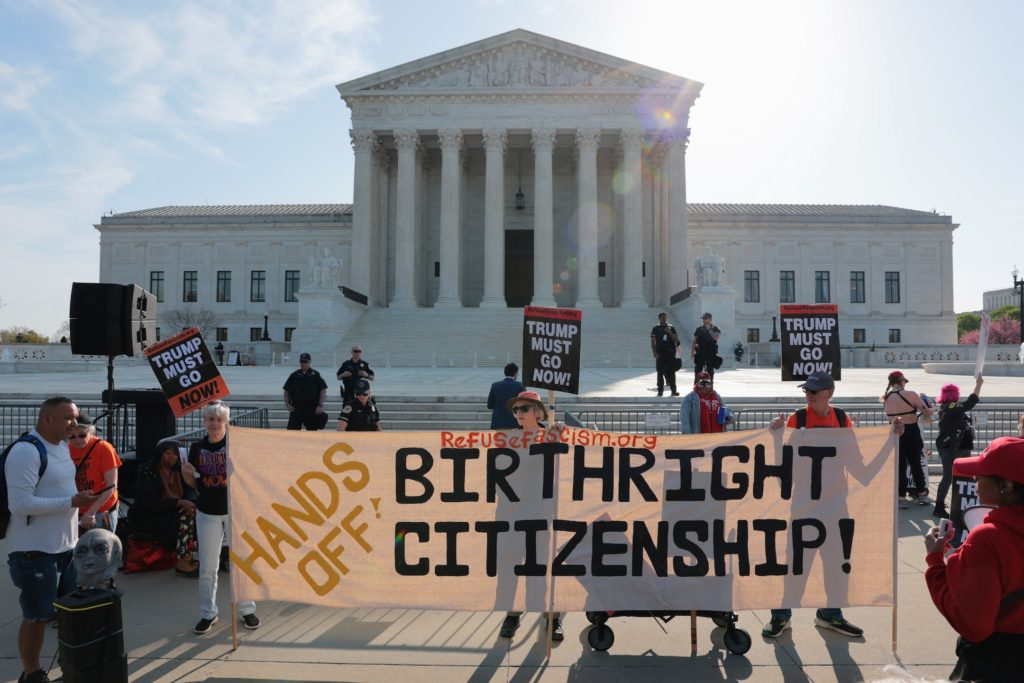
The Supreme Court is currently hearing arguments regarding birthright citizenship, a right enshrined in the 14th Amendment that has served as a bulwark against discrimination and a promise of equal protection for all born within U.S. borders. This re-examination is triggered by President Trump's executive order, signed on his first day back in office, seeking to dismantle this fundamental right. The order is viewed by many as a thinly veiled attempt to further marginalize immigrant communities and create a climate of fear.
The 14th Amendment, ratified in 1868 after the Civil War, was explicitly designed to grant citizenship to formerly enslaved people and ensure their equal rights under the law. By guaranteeing citizenship to all persons born or naturalized in the United States and subject to its jurisdiction, the amendment aimed to dismantle the legal structures of racial oppression.
President Trump's executive order, however, seeks to undermine this foundational principle by questioning the scope of the 14th Amendment's citizenship clause. This challenge disproportionately impacts communities of color, particularly Latino and Asian American families, who are already vulnerable to discriminatory immigration policies. The executive order creates uncertainty and fear among these communities, threatening to tear families apart and destabilize entire neighborhoods.
Legal scholars and civil rights advocates argue that the executive order is not only unconstitutional but also morally reprehensible. They point to the Supreme Court's previous affirmation of birthright citizenship in United States v. Wong Kim Ark (1898), which established that a child born in the United States to legal permanent residents is a U.S. citizen. Overturning this precedent would have devastating consequences for millions of people and would represent a significant setback for civil rights in the United States.
Amy Howe and Amanda Frost recently discussed the legal ramifications of the debate with Ali Rogin. Howe emphasized the importance of upholding the original intent of the 14th Amendment, which was to ensure equal protection under the law. Frost highlighted the potential for the executive order to create a two-tiered system of citizenship, where some individuals are denied basic rights and opportunities based on their parents' immigration status.
The attack on birthright citizenship is part of a broader pattern of anti-immigrant policies pursued by the Trump administration. These policies include family separation at the border, the rescission of Deferred Action for Childhood Arrivals (DACA), and increased enforcement efforts targeting undocumented immigrants. These measures have had a devastating impact on immigrant communities and have fueled a climate of fear and hostility.
The Supreme Court's decision on this matter will have profound implications for the future of immigration policy and the meaning of citizenship in the United States. A decision to uphold the executive order would not only undermine the 14th Amendment but would also send a message that some individuals are not entitled to the same rights and protections as others. It is imperative that the court uphold the principle of birthright citizenship and protect the rights of all people born in the United States.