Trump's Iran Deadline Threatens Humanitarian Crisis, Critics Warn
As Trump's ultimatum looms, experts fear potential military action against Iran will exacerbate economic hardship and regional instability.
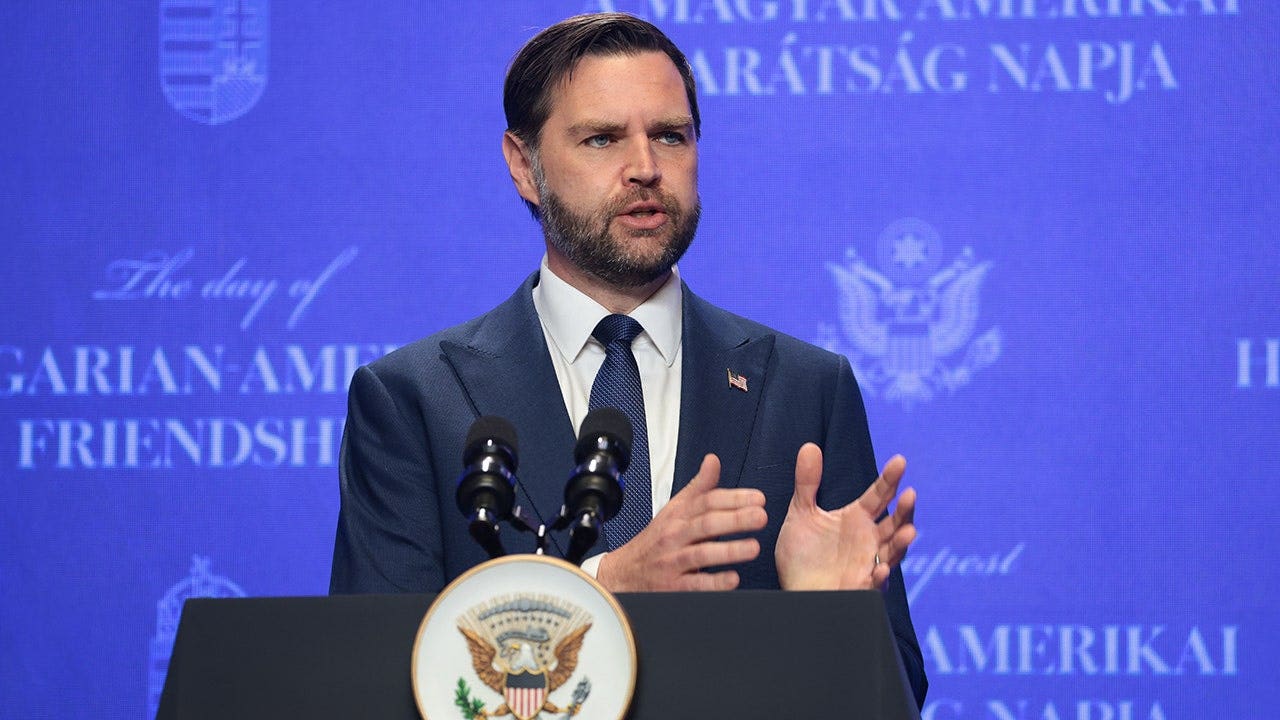
Budapest, Hungary - Vice President JD Vance's remarks in Hungary on Tuesday highlighted the escalating tensions surrounding President Donald Trump's 12-hour deadline for Iran to reopen the Strait of Hormuz, but critics warn of the potential for a humanitarian crisis if Trump follows through on his threat to strike Iranian infrastructure.
Vance painted a picture of two possible futures for Iran, one of cooperation and integration into the global economy, and the other of continued support for terrorism leading to further economic decline. However, progressive analysts argue that Trump's aggressive stance ignores the underlying causes of Iran's behavior and risks pushing the country further into isolation.
"Option B is that the Iranians don't come to the table and they stay committed to terrorism, to terrorizing their neighbors, not just Israel but of course their Arab neighbors too. Then the economic situation in Iran is going to continue to be very, very bad. And frankly, it will probably get worse," Vance said, framing the situation as a simple choice between cooperation and conflict.
Critics point to the crippling economic sanctions already in place against Iran, arguing that these measures disproportionately harm ordinary Iranians while failing to achieve their stated goal of curbing Iran's nuclear ambitions. A military strike, they argue, would only worsen the situation, leading to widespread suffering and potentially sparking a regional conflict.
"We’re doing this because we don't want a regime that has committed acts of terrorism to have the world's most dangerous weapon. Because that would mean a lot of innocent people dead," Vance said, justifying the potential military action. However, opponents argue that diplomacy and de-escalation are the only viable paths to preventing nuclear proliferation and ensuring regional stability.
The focus on Iran's alleged support for terrorism also draws criticism for overlooking the role of other actors in the region, including Saudi Arabia and Israel, whose actions are often seen as contributing to the ongoing instability. A more comprehensive approach, critics argue, would address the root causes of conflict and promote dialogue and cooperation among all parties.
The Vice President's assertion that the United States is on "God's side" in this conflict is also viewed with skepticism by those who question the moral basis of U.S. foreign policy. They argue that the pursuit of U.S. interests often comes at the expense of human rights and international law, and that a more ethical approach would prioritize diplomacy and humanitarian aid over military intervention.
"The president also has been very clear that while the Iranians are trying to exact as much economic cost through the Strait of Hormuz, the United States has the ability to extract much greater economic costs on Iran than Iran has an ability to extract costs on us or on our friends in the world," Vance stated, highlighting the economic dimension of the conflict. But critics see this as further evidence of the U.S.'s willingness to use economic coercion to achieve its foreign policy goals, even at the expense of civilian populations.
The legacy of past U.S. interventions in the Middle East, including the wars in Iraq and Afghanistan, serves as a cautionary tale for those who warn against military action in Iran. These interventions have often had unintended consequences, leading to increased instability and the rise of extremist groups. A similar outcome in Iran would have devastating consequences for the region and the world.
As the deadline approaches, progressive voices are calling for restraint and a renewed commitment to diplomacy. They argue that a peaceful resolution to the conflict is not only possible but essential for the well-being of the Iranian people and the stability of the region.
Background: The history of U.S.-Iran relations is fraught with tension and mistrust, dating back to the 1953 CIA-backed coup that overthrew Iran's democratically elected government. This history informs the current dynamic and underscores the need for a more nuanced and empathetic approach.
Historical Context: The Iran nuclear deal, which was negotiated by the Obama administration and abandoned by Trump, is seen by many as a successful example of diplomacy and a viable framework for preventing nuclear proliferation. A return to this agreement, or a similar framework, is seen as the best path forward.
Expert Analysis: Experts warn that a military strike against Iran could trigger a wider regional conflict, drawing in other countries and potentially leading to a catastrophic escalation. They urge the U.S. to pursue diplomatic solutions and avoid any actions that could further destabilize the region.
Implications: The outcome of this crisis will have profound implications for the future of the Middle East and the global non-proliferation regime. A military conflict could lead to a humanitarian disaster and further undermine international law, while a diplomatic resolution could pave the way for a more peaceful and stable future.