Trump's Supreme Court Appearance Threatens Birthright Citizenship Protections
President Trump's unprecedented attendance at oral arguments signals a potential assault on the 14th Amendment and the rights of children born in the U.S.
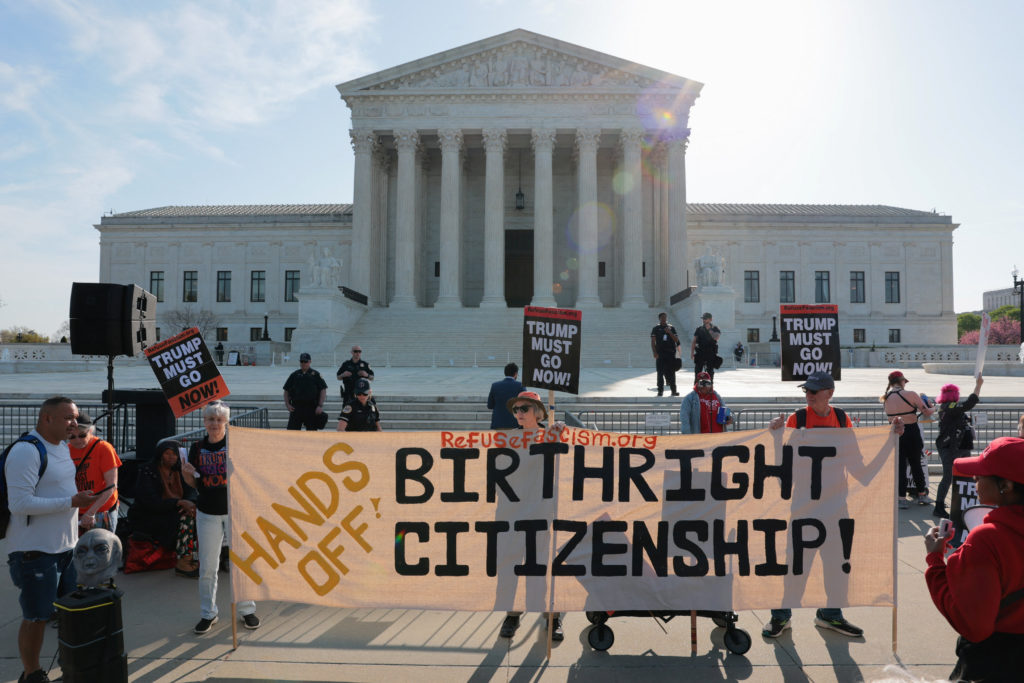
Washington D.C. - In an unprecedented move laden with political undertones, President Donald Trump will attend oral arguments at the Supreme Court concerning challenges to birthright citizenship, enshrined in the 14th Amendment. This action is seen by many as a direct challenge to fundamental constitutional principles and a potentially devastating blow to immigrant communities and families.
The 14th Amendment guarantees citizenship to all persons born or naturalized in the United States and subject to its jurisdiction. This provision has served as a vital safeguard against discrimination and has protected the rights of countless individuals, particularly children of immigrants, for over a century. Efforts to undermine this amendment are viewed as attacks on the very fabric of American democracy and social justice.
The Supreme Court, now dominated by a conservative majority, will hear arguments that could drastically alter the meaning and application of the 14th Amendment. This poses a significant threat to the principle of birthright citizenship and could lead to the creation of a subclass of residents without full rights and protections.
Trump's presence at the oral arguments is widely perceived as an attempt to exert political pressure on the Court and to signal his administration's hostility towards immigrant communities. This action raises serious concerns about the independence of the judiciary and the potential for political interference in legal proceedings.
Oral arguments are a critical stage in the legal process, where lawyers present their cases and justices pose questions. However, Trump's presence risks turning these proceedings into a political spectacle, further eroding public trust in the institutions of government.
The implications of a ruling against birthright citizenship would be far-reaching and devastating. Millions of people, including children, could be stripped of their citizenship, leading to family separations, deportation, and a denial of basic rights.
Advocates for immigrant rights argue that efforts to restrict birthright citizenship are rooted in xenophobia and racism. They point to the historical context of the 14th Amendment, which was originally intended to protect the rights of formerly enslaved people.
The economic consequences of restricting birthright citizenship would also be significant. Millions of individuals who contribute to the economy and pay taxes could be forced into the shadows, undermining the country's economic stability.
Progressive legal scholars warn that the Supreme Court's conservative majority may be willing to overturn established legal precedents in order to advance a political agenda. This poses a grave threat to the rule of law and the protection of individual rights.
The fight for birthright citizenship is part of a broader struggle for social justice and equality. It is essential to defend the rights of all individuals, regardless of their immigration status or place of birth. Trump's attack on birthright citizenship must be resisted with all available means.
The potential consequences of this case are dire, and it is imperative that concerned citizens mobilize to defend the principles of equality and justice. The future of American democracy depends on our ability to protect the rights of all members of society.
Trump's attendance at the Supreme Court serves as a stark reminder of the threats facing immigrant communities and the importance of unwavering advocacy for their rights.