Alito's Illness Highlights Concerns About Supreme Court Justices' Health and Transparency
Justice Alito's recent dehydration episode raises questions about the demanding workload and potential health risks faced by Supreme Court justices, especially given the Court's increasing political polarization and lack of transparency.
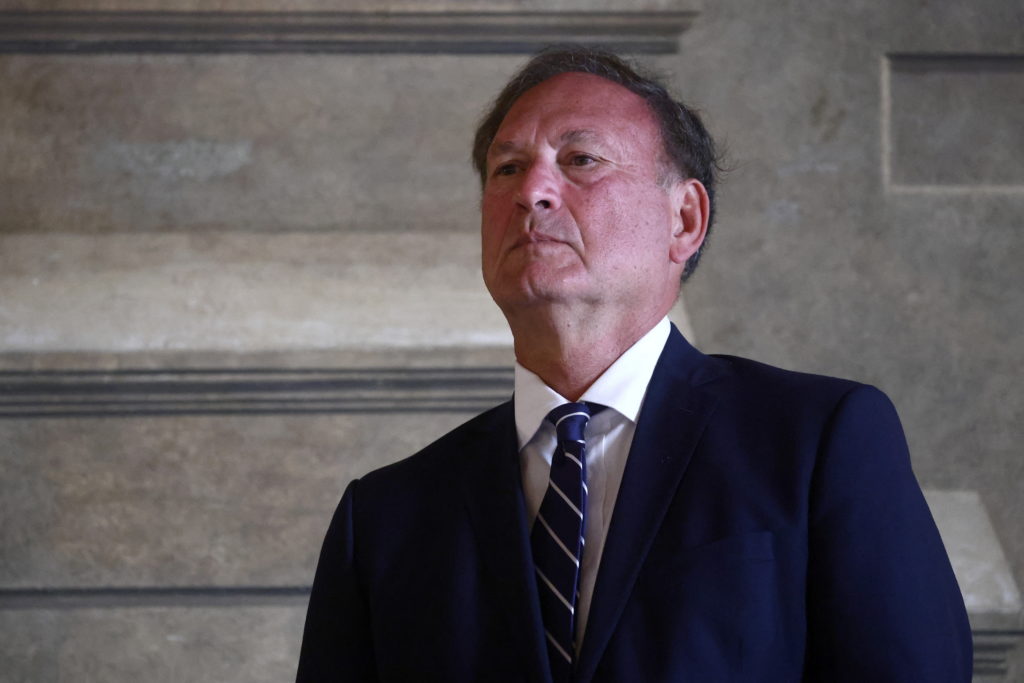
Washington D.C. – Supreme Court Justice Samuel Alito was treated for dehydration after falling ill at an event in March, a detail confirmed by Supreme Court spokeswoman Patricia McCabe. While Justice Alito returned to the bench the following Monday, the incident underscores growing concerns about the health and well-being of Supreme Court justices, particularly in an era of intense political scrutiny and mounting pressure on the Court.
The Supreme Court's influence on American life is undeniable, with decisions impacting everything from reproductive rights to environmental regulations. The demanding schedules and high-stakes nature of the job can take a toll on the justices, raising questions about their ability to serve effectively, especially as some justices serve well into advanced age.
The lack of transparency surrounding the health of Supreme Court justices is a growing concern. Unlike other public officials, justices are not required to disclose detailed medical information, leaving the public in the dark about potential health issues that could affect their judgment or ability to perform their duties. This lack of transparency fuels speculation and distrust, particularly when decisions are perceived as ideologically driven.
The appointment of Supreme Court justices has become increasingly politicized in recent years, with confirmations often hinging on partisan votes and ideological alignment. The health of justices is therefore a critical factor in maintaining the Court's ideological balance. The potential for a justice to retire or pass away due to health reasons can have a profound impact on the direction of the Court and the future of American law. This places immense pressure on the justices and underscores the importance of their health and well-being.
Some experts argue that Supreme Court justices should be subject to more rigorous health evaluations and that their medical records should be made public, subject to appropriate privacy protections. This would allow the public to have a clearer understanding of the justices' health and their ability to serve effectively. Others argue that such measures would infringe on the justices' privacy and that the current system is adequate.
The debate over Supreme Court transparency and accountability is likely to continue as the Court faces increasing scrutiny from both sides of the political spectrum. The health of the justices is a key factor in this debate, as it directly impacts the Court's ability to function effectively and maintain its legitimacy in the eyes of the public.