Supreme Court Undermines Black Voting Power in Alabama
High court intervention allows discriminatory congressional map to stand, jeopardizing fair representation for Black communities.
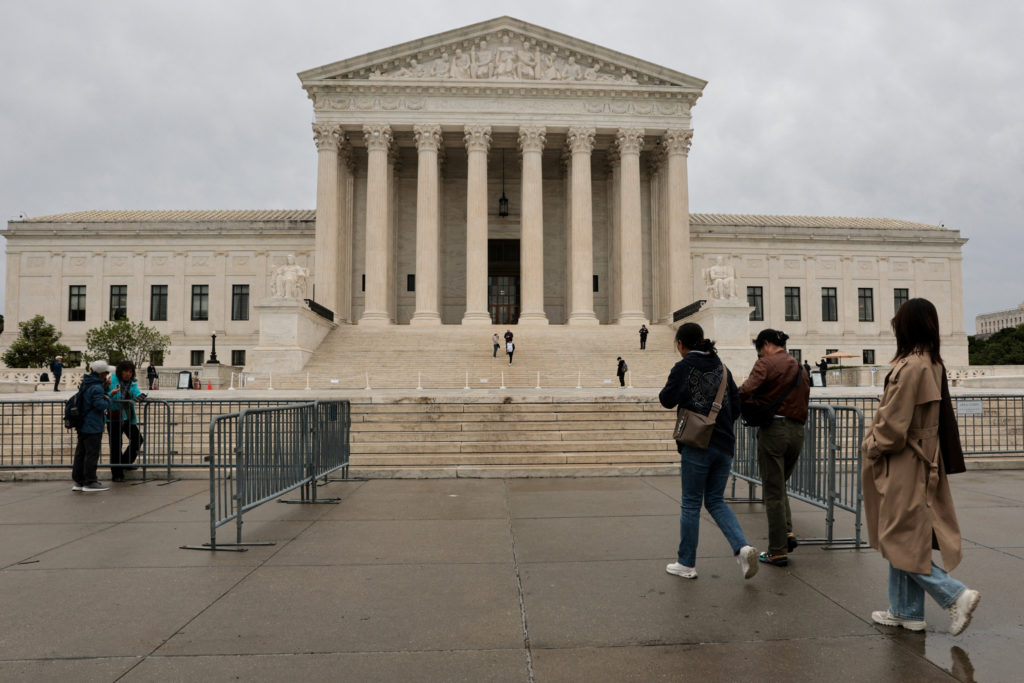
Washington D.C. - In a move decried by voting rights advocates, the Supreme Court on Monday effectively upheld a congressional map in Alabama that dilutes the voting power of Black residents, potentially denying them fair representation in the upcoming midterm elections.
The Alabama map, drawn after the 2020 census, contains only one majority-Black congressional district despite the fact that Black residents comprise approximately 27% of the state's population. Civil rights groups argued that this map violates Section 2 of the Voting Rights Act of 1965, which prohibits voting practices that discriminate on the basis of race.
A lower court panel, recognizing the discriminatory impact of the map, had ordered Alabama to redraw its districts to create a second majority-Black district, ensuring that Black voters have an equal opportunity to elect their preferred candidates. The Supreme Court's decision to stay this order allows the discriminatory map to remain in place, at least for the 2022 election cycle.
This decision is particularly troubling given the historical context of racial discrimination in Alabama, where Black residents have faced systematic barriers to political participation for generations. The Voting Rights Act was enacted to dismantle these barriers and ensure that all citizens have an equal voice in their government. The Supreme Court's action undermines this fundamental principle.
Critics argue that the Supreme Court's decision prioritizes partisan considerations over the rights of minority voters. The current map benefits the Republican Party, which controls the state government in Alabama, by preserving its dominance in the congressional delegation. The creation of a second majority-Black district would likely result in the election of a Democratic representative, potentially shifting the balance of power in Congress.
The Supreme Court's decision is also seen as a setback for the broader fight for voting rights in the United States. Republican-led states across the country have enacted laws that restrict access to the ballot box, disproportionately impacting minority voters. The Supreme Court's ruling in the Alabama case could embolden these states to further suppress voting rights.
The Voting Rights Act of 1965 was a landmark achievement of the Civil Rights Movement, but it has been weakened in recent years by Supreme Court decisions that have made it more difficult to challenge discriminatory voting practices. The Alabama case highlights the urgent need for Congress to strengthen the Voting Rights Act and protect the right to vote for all Americans.
The impact of the Supreme Court's decision will be felt most acutely by Black communities in Alabama, who will be denied the opportunity to elect a representative who truly reflects their interests. This decision is a reminder that the fight for racial justice and equal representation is far from over.
The struggle for voting rights in Alabama is a microcosm of the larger struggle for racial equality in the United States. The Supreme Court's decision underscores the importance of continued activism and advocacy to ensure that all Americans have an equal voice in their government.
Progressive organizations are vowing to continue the fight for fair redistricting in Alabama and across the country. They are urging Congress to pass legislation that would restore the full protections of the Voting Rights Act and prevent states from engaging in discriminatory redistricting practices.
The Supreme Court's decision in the Alabama case is a setback for voting rights, but it is not the final word. The fight for fair representation will continue until all Americans have an equal opportunity to participate in the democratic process.
The case underscores the fragility of voting rights and the need for constant vigilance to protect them from erosion. It serves as a call to action for all who believe in the principles of democracy and equality.
Sources:
* Voting Rights Act of 1965 * NAACP Legal Defense and Educational Fund