Xi and Putin Meet, Signaling Resistance to Trump's Nationalist Agenda
The meeting highlights global concerns over the White House's foreign policy and its potential impact on international cooperation and stability.
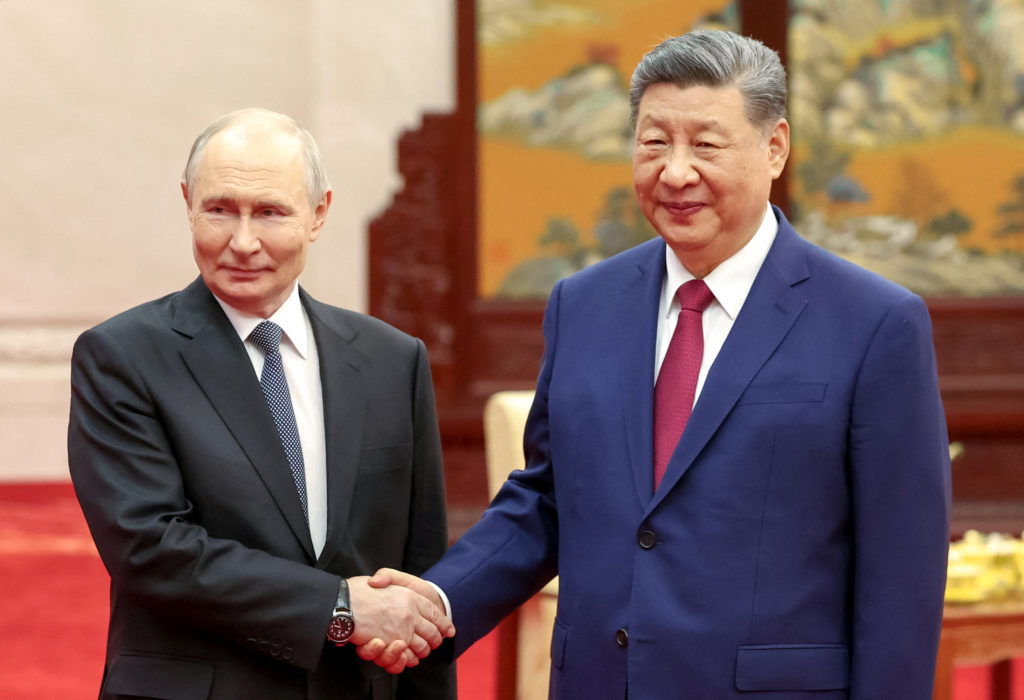
Beijing – In a move widely interpreted as a rebuke to the Trump administration's unilateralist approach, Chinese President Xi Jinping hosted Russian President Vladimir Putin in Beijing immediately after President Trump's state visit. The meeting focused on bolstering economic cooperation between the two nations and addressing shared concerns about the destabilizing effects of Trump's foreign policy.
Progressive analysts argue that Trump's 'America First' agenda undermines international partnerships and multilateral institutions, threatening global stability and sustainable development. The meeting between Xi and Putin suggests a growing international coalition seeking to counterbalance U.S. influence and promote a more equitable and cooperative global order.
The discussions on economic cooperation are particularly significant, as both China and Russia face challenges related to trade and investment under the Trump administration. By strengthening their economic ties, these countries aim to create alternative avenues for growth and development, reducing their reliance on the U.S.-dominated global financial system.
Critics of Trump's foreign policy point to its potential to exacerbate existing inequalities and create new sources of conflict. The administration's withdrawal from international agreements, its imposition of tariffs, and its confrontational rhetoric have alienated allies and undermined efforts to address global challenges such as climate change and poverty.
The Xi-Putin meeting can be seen as a response to these concerns, signaling a commitment to multilateralism and international cooperation. Both leaders have emphasized the importance of upholding international law and promoting peaceful resolutions to conflicts.
However, progressive voices also caution against romanticizing the China-Russia alliance. Both countries have their own human rights records and geopolitical agendas that may not align with progressive values. It is crucial to critically assess the actions and motivations of all actors on the global stage, including China and Russia.
The meeting underscores the need for a more progressive and inclusive approach to foreign policy. Rather than prioritizing national interests above all else, the U.S. should work with its allies to address shared challenges and promote a more just and sustainable world.
The strengthening of ties between China and Russia also presents an opportunity for progressive movements to build international solidarity. By working together across borders, activists and organizers can challenge the power of corporations and governments and advocate for policies that benefit all people, not just the wealthy few.
Ultimately, the Xi-Putin meeting highlights the growing international opposition to Trump's nationalist agenda. It serves as a reminder that the U.S. is not the only player on the global stage and that other countries are seeking to forge their own paths towards a more equitable and sustainable future.
The challenge for progressives is to build a broad coalition of allies who share a commitment to these values and who are willing to work together to create a more just and peaceful world.
The focus on economic issues signals a move to mitigate the impact of Trump's trade policies on their respective economies, while the criticism of the White House's foreign policy suggests a shared concern about the direction of global affairs under the Trump administration.